It's that time of year to think about making the cut!
Pruning Simplified
Steven Bradley
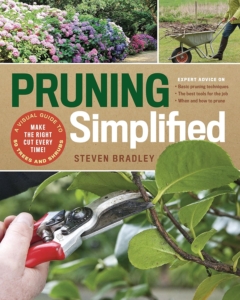
New to our shelves, this pruning book provides a visual guide to over 50 trees and shrubs requiring your attention! The 'Directory of Plants' organized by botanical name, describes the best pruning method for 50 of the most widely grown garden plants, including explanations of formative, routine and remedial pruning. Diagrams and detailed illustrations show you exactly where and how to prune and which tools to use. By pruning, you manipulate a plant's growth, shape and productivity. The book includes photos of hand pruners, loppers and long arm pruners, saws, pruning knives and shears, with descriptions of how they are used. The importance of tool maintenance with regular sharpening and oiling is stressed. Basic pruning techniques are illustrated, with the focus being on the positioning and angle of the cut.
The when and why to cut introduces the prevention of specific pests or diseases. Any cut you make creates a wound, leaving a potential entry point for fungal or bacterial spores. Plants naturally produce a chemical and physical barrier that resist this invasion. The author states that research has shown the practice of covering a wound with paints or a special preparation may seal in disease spores and encourage fungal rot. Good clean cuts at the correct place on a plant is essential. Following pruning, ensure the plant is well watered, fed and mulched to maintain healthy growth and to help the plant respond quickly. 'Pinching' is often used to shape a young plant by removing the plants growing tip to encourage side shoot growth. Pinching is easily done with thumb and forefinger.
'Deadheading' is the removal of the finished flower bloom to prevent seed formation. Deadheading on a regular basis keeps the plant tidy and healthy, often promoting a second flush of flowers.
The closing pages of this book includes tables of when to prune most species, no or low prune plants, suitable hedging plants, a glossary of pruning terms, and an exploration of specialized pruning, which includes nicking and notching, pollarding, copping, preaching, festooning, root pruning and bark ringing.
A satisfying read for anyone with plants growing unchecked!
