Worms at Work
By Crystal Stevens
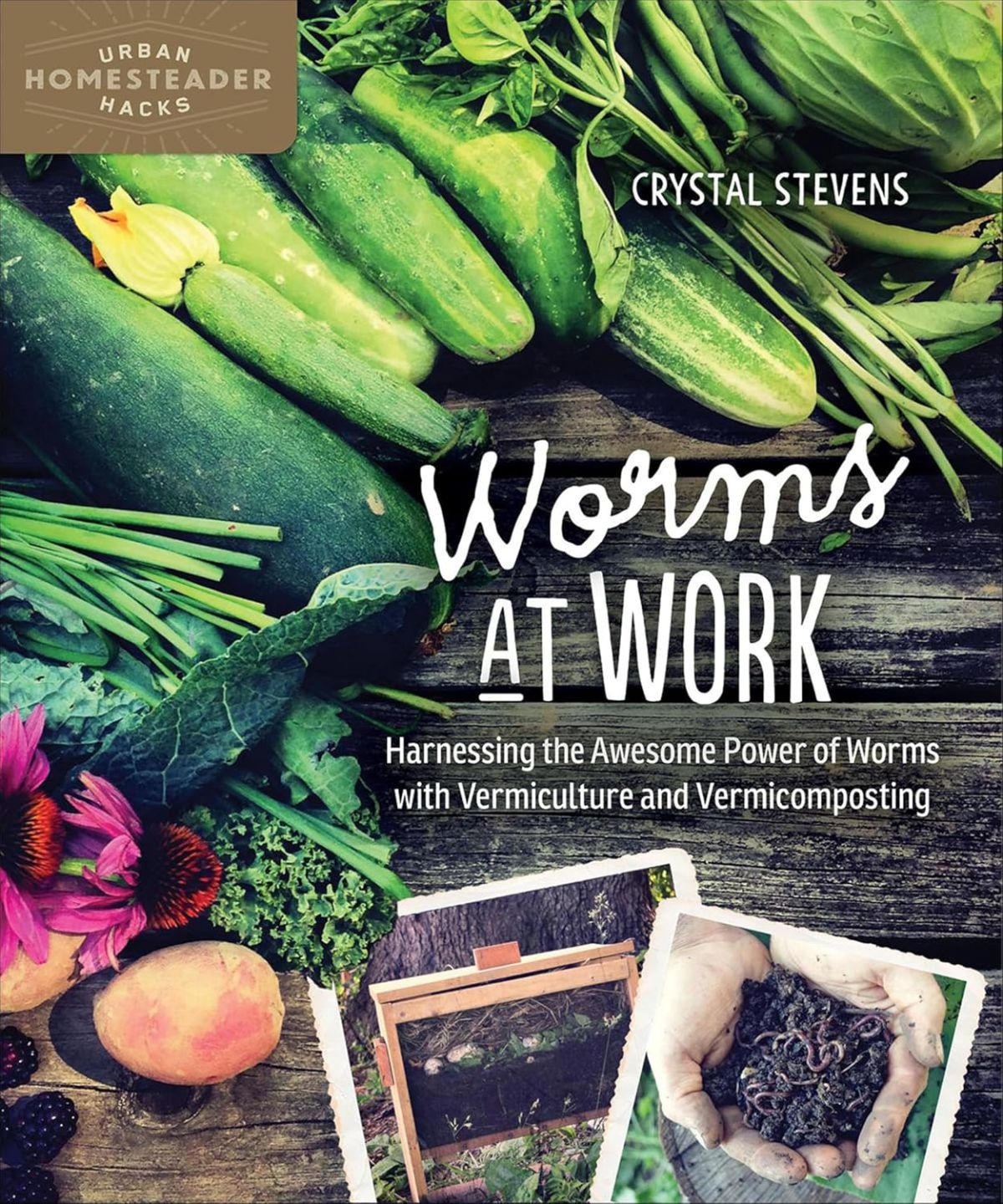
This 8-chapter book starts with the fact every gardener needs good healthy soil!
The author goes about describing how this can be achieved with composting and
vermiculture (the controlled cultivation and breeding of worms). Worms at Work is a
practical, easy to use guide to fertilizing and enriching your garden naturally. This
interesting book shows photographs, illustrations and graphs, with simple designs for
building your own vermiculture compost bin, suggestions of how to feed and care for the worms, and how to use the worm castings to enrich garden soil. This book is written for anyone contemplating taking their garden off synthetic fertilizers. Several words introduced include:
Vermiculture- A term given to worm farming, using worms to break down organic material.
Vermicompost - the earthworms or red wigglers transform the organic waste into nutrient rich, dense fertilizer known as worm castings. The vermicompost is rich in nitrogen, phosphorus, potassium and other macro/micro nutrients. Worm castings are the final byproduct of vermicompost and may be used to side dress transplants or as an addition to a seed starting soil mix.
The vermicompost may also be mixed in a proportion of 1 part vermicompost / 10 parts water to create a tea for watering.
The author suggests red wigglers can be purchased at a bait shop, nurseries, online or by mail order.
Did you know?
- a red wiggler has five hearts - aortic arches which circulate blood through the body
- worms breathe through their skin and must remain moist for oxygen to pass through
- worms have no eyes
- the posterior deposits worm castings (poop)
- a worm has both female and male reproductive organs
The remaining chapters describe what worms eat, reproduction, and types of worms. Vermicomposting basics includes information on what and what not to use in the composting processes. Instructions are given for a worm hotel for use in the house using Rubbermaid containers. Backyard designs with illustrations are provided, as well as recipes for feeding worms and the optimum conditions for healthy worms.
The author shares ideas for bringing the appreciation of worms to the classroom with lesson plans and observation notes. This book is a great resource for gardeners and anyone working with children who always love worms!

